Deloitte: Lunar Economy to Hit $566B by 2050
A Deloitte report estimates the emerging lunar economy could generate between $343 billion and $566 billion in cumulative economic value by 2050.
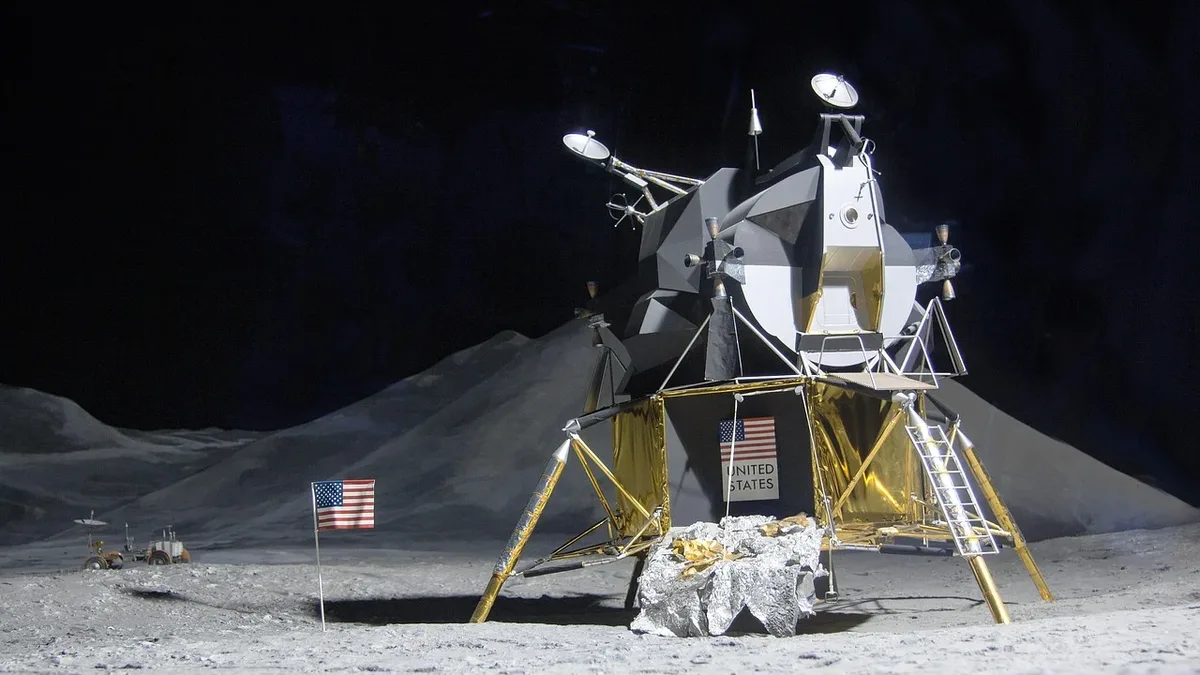
A new report from Deloitte estimates the lunar economy could generate up to $566 billion in cumulative economic value by 2050. The analysis, released on August 26, 2026, projects a conservative value of $343 billion under a slower growth scenario.
Deloitte's report, titled "Building the Lunar Economy," explores how sustained activity on the Moon could develop as governments, space agencies, and commercial companies accelerate their programs. More than 400 lunar missions are planned over the next two decades.
A New Phase of Lunar Activity
The report finds the Moon is becoming a focal point for science, security, commerce, and resource development. The lunar South Pole is of particular strategic importance. It may contain significant water ice deposits in permanently shadowed regions.
Nearby ridgelines could offer near-continuous sunlight for power generation. Water ice may eventually support fuel production and life support, potentially reducing the need to transport supplies from Earth. Falling launch costs and new public-private procurement models are reshaping the economics of sustained operations.
Commercial Opportunity and Uncertainty
Deloitte cautions that a thriving lunar economy is not inevitable. Some markets may develop sooner than others. Lunar data and national security services, for instance, do not require a full lunar economy to exist first.
Other potential markets depend on infrastructure and demand that are still emerging. These include lunar propellant, helium-3 extraction, and space-based compute.
The analysis also points to broader innovation effects. Technologies developed for lunar construction, communications, and medicine may find applications on Earth. They could be particularly useful in remote or extreme environments.
Economic Value Scenarios
The report's economic analysis estimates the potential value of both the enabling infrastructure and the markets it could create. The following table outlines the two growth scenarios projected through 2050.
| Scenario | Cumulative Economic Value (through 2050) |
|---|---|
| Conservative Growth | $343 billion |
| Accelerated Growth | $566 billion |
Brett Loubert, Deloitte Space leader, suggested that organizations moving early to understand the systems and partnerships involved may be better positioned as new markets emerge.
The opportunity is not limited to space companies. It could draw on capabilities from energy, communications, robotics, manufacturing, and logistics sectors. The report is structured around a framework exploring both what it takes to operate on the Moon and what that infrastructure could make possible.
It focuses primarily on US policy and commercial activity while recognizing the lunar economy is a global endeavor. The full value of these investments may not be realized for decades. The confirmation of water ice at the lunar poles is a key factor reshaping the economics of long-term operations.