RBI raises repo rate to 5.50% amid persistent inflation
The Reserve Bank of India increased its benchmark interest rate for the first time since 2023, lifting the repo rate by 25 basis points to 5.50% and shifting its policy stance to 'calibrated tightening' as inflation remains above target.
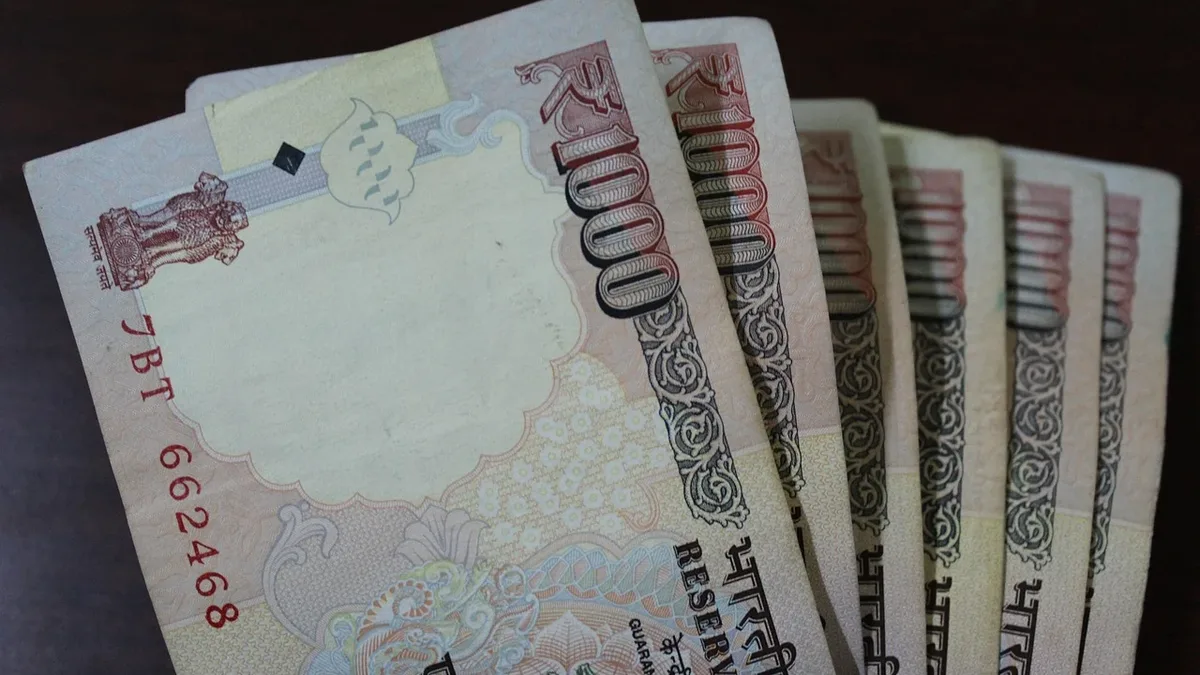
The Reserve Bank of India raised its benchmark repo rate by 25 basis points to 5.50% on Wednesday. This marks the central bank's first rate hike since 2023 and the first under Governor Sanjay Malhotra, who took office in December 2024. The monetary policy committee also decided to change its policy stance to 'calibrated tightening'.
Inflation pressures persist
Retail inflation rose to a 22-month high of 4.8% in August, remaining above the RBI's medium-term target of 4%. The central bank has lifted its inflation projection for the financial year ending March 2027 to 5.2% from a previous expectation of 5%. Governor Sanjay Malhotra stated that "inflation and its outlook are not benign, as they were last year." He added that rate cuts are off the table in the near term and that future policy action can only be a hike or a pause.
The RBI expects core inflation to be 4.4% for the financial year ending March 2027. Retail inflation has risen for ten consecutive months.
Global context and market reaction
India remains the world's fastest-growing major economy, with GDP growth of 7.8% in April-June 2024. This was 80 basis points above the RBI's August forecast. The rate decision triggered immediate market reactions. The benchmark 10-year government bond yield jumped to its highest level since December 2023, rising 5 basis points to 7.243%. The Nifty 50 stock index fell 0.7%.
The move aligns with a global shift toward tighter monetary policy. Growth has cooled for many major economies, including the U.S., China, and Japan. Last month, the U.S. Federal Reserve raised interest rates for the first time in more than three years and indicated another hike could follow. The Bank of Japan raised rates to a 31-year high, while the South Korean and European central banks have also raised rates in the last two months.
Forward guidance and expectations
Economists and major banks have outlined their expectations for the path of policy and the economy. Their forecasts for key indicators are summarized below.
| Entity | FY27 Inflation Forecast | FY27 Growth Forecast | Rate Hike Expectation |
|---|---|---|---|
| RBI | 5.2% | Not specified in brief | Implemented 25 bps hike |
| Barclays | 4.8% (with upside risks) | 7.1% | Not specified |
| IDFC FIRST Bank (Gaura Sengupta) | 5.2% | Around 7.5% | Not specified |
| World Bank | Not specified | 7.1% | Not specified |
| BofA Global Research | Not specified | Revised higher | 100 bps cumulative hikes |
HSBC and Goldman Sachs both expect the RBI to raise interest rates again in December. HSBC warned that a perceived dovish hike during rising inflation would hurt India's appeal among global investors, stating that markets need to see a 'credible' hike showing the RBI's ability to raise rates again.
Economists broadly expect the RBI's hiking cycle to extend beyond October but see it as shallow, with most forecasts clustered around 50-75 basis points of cumulative tightening. The cycle is likely to run through December or February 2027. The RBI's last rate-hiking cycle, from May 2022 to February 2023, saw a cumulative increase of 250 basis points.
Some economists, however, opposed an October hike. Madan Sabnavis, chief economist at Bank of Baroda, expected the RBI to leave the repo rate unchanged this month, arguing it could weigh on consumption before the festival season. He still expects 50-75 basis points of hikes over the cycle.
India garnered $143.6 billion between 8 June and 31 August 2024 through foreign currency inflows, leading to excess liquidity. Economists expect the RBI to drain these excess funds from the banking system using tools like variable rate reverse repos and open market operation sales. Sameer Narang, chief economist at ICICI Bank, noted the global environment has completely changed since the last policy with higher rates and a build-up of inflation.
HSBC and Goldman Sachs expect the RBI to raise interest rates again in December.